


There are fewer and fewer journalists every day to create those earned media stories. Which means their inboxes are bursting with pitches. Unfortunately, journalists report that the vast majority of these pitches aren’t helpful at all.
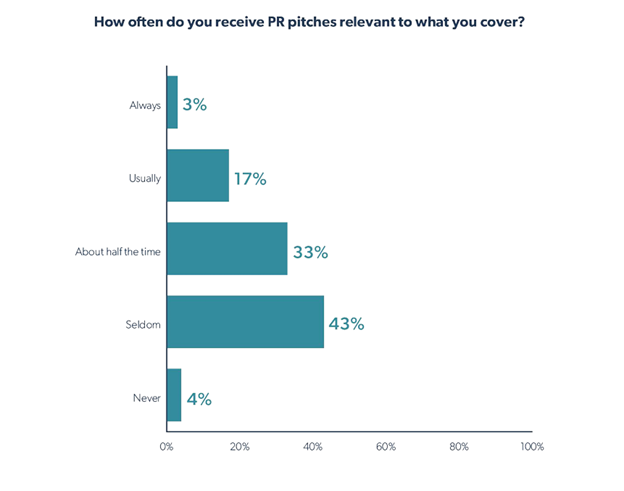
In fact, about half (47%) of respondents to Muck Rack’s The State of Journalism 2026 survey said that PR pitches are seldom or never relevant to the work they do.
This may account for why so few stories actually start with a pitch. According to the data, the majority (51%) of journalists say only 1-10% of their published stories started with a pitch. Fourteen percent say their stories never start with a pitch.
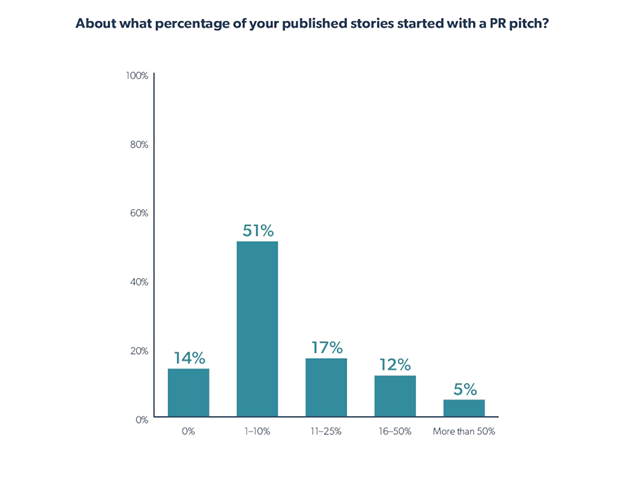
Naturally, journalists want to set their own agendas and can’t be expected to get all or even most story ideas from PR. But the tiny fraction of stories originating from pitches combined with the low relevance of most pitches should serve as a wake-up call to PR professionals: it’s time to do better.
There’s one important bright spot.
Despite the low level of pitch success, most journalists still greatly value the role PR professionals play in their reporting process.
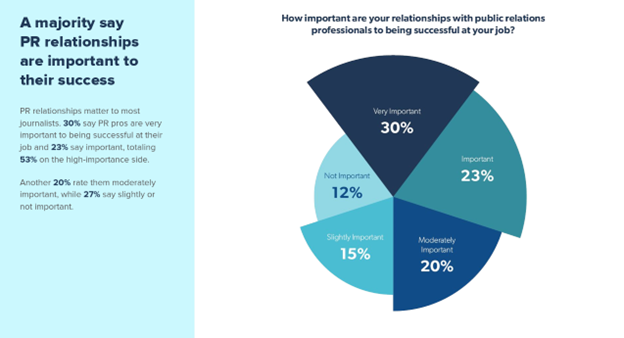
Seventy-three percent of journalists say PR professionals are at least moderately important to their success. That’s a huge number and points to the hard work PR professionals put in when it comes to issuing proactive statements, responding to media requests, coordinating interviews and the other myriad ways PR professionals work with journalists.
So, it’s not that the relationship as a whole between PR pros and journalists is bad. It’s that practitioners are frequently falling down when it comes to providing useful, specific and relevant story ideas to journalists. That means PR pros are losing out on opportunities to shape narratives in the media and insert stories into publications, but are relegated to a more reactive role.
Here’s where the pitch process falls apart — and how PR pros can improve.
When pitches fall short
Let’s cut to the chase: What immediately gets a journalist to delete your pitch without further consideration?
The biggest issue is relevance; if a pitch isn’t relevant, most journalists will delete it outright. That’s a big problem considering we know about half of journalists seldom or never receive relevant pitches.
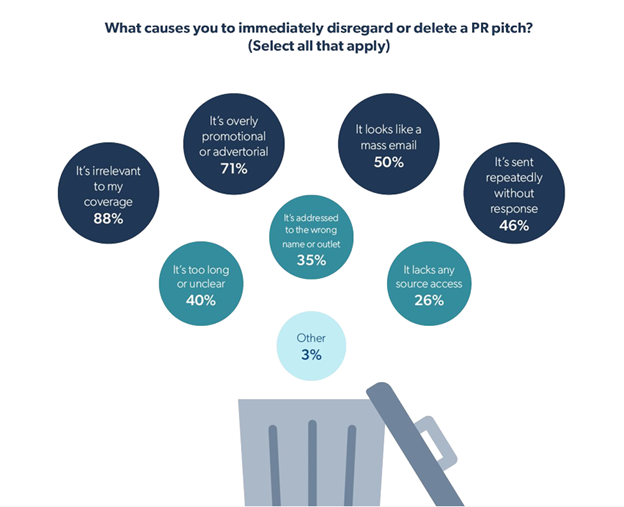
The next biggest complaint from journalists is when a pitch is overly promotional. So, if your pitch comes on too hard and doesn’t offer a benefit to the audience, it might wind up in the trash can.
There’s a big gap before the next set of complaints: looking like a mass email, repeated follow-ups, and long or unclear pitches.
But relevance is king, as we can see in the next question, too.
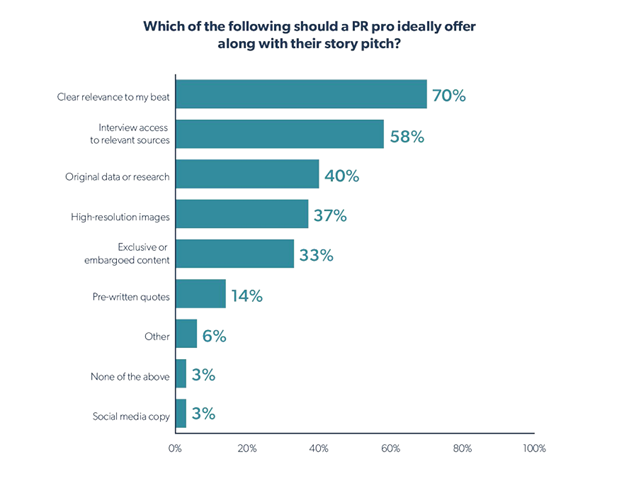
We don’t need to beat a dead horse here. Relevance is king. But what does that actually mean? Muck Rack asked reporters, and by a 33-point margin, reporters said that relevant pitches directly affect the community their audience belongs to.

It’s a really clear way of putting it, and a check that can be applied to any outlet. Before pitching, ask yourself:
- What community does this journalist’s audience belong to?
- Does my pitch impact that audience?
By answering these two questions, you can begin to construct a pitch that isn’t immediately deleted, but rather stands out amid a sea of dross for being uniquely relevant in a way most pitches are not.
Remember above all that journalists don’t view you as the enemy. They want to work together and value your expertise and your pitches. But to succeed, you’ve got to speak to their audience first and foremost. Everything else is gravy.
Allison Carter is editorial director of PR Daily and Ragan.com. Follow her on LinkedIn.