




Introduction
Public relations has always played a central role in healthcare, but in an era defined by rapid information flow, regulatory oversight, and heightened public awareness, its importance has intensified. Hospitals, pharmaceutical companies, medtech firms, digital health platforms, and research institutions operate in an environment where trust is foundational and communication gaps can carry serious consequences.
Despite the rise of social media, influencer outreach, and direct-to-patient marketing, press releases remain a critical pillar of healthcare communication in 2026. Unlike transient social posts or promotional content, press releases offer a structured, verifiable, and media-ready format that aligns with the healthcare industry’s need for accuracy, accountability, and transparency. For healthcare organizations, silence is no longer neutral; it is a strategic risk.
Why the Healthcare Industry Needs Press Releases
Healthcare is among the most scrutinized industries globally. Decisions made by healthcare organizations affect patient safety, public health outcomes, and regulatory compliance. As a result, the industry faces unique communication challenges that demand formal and credible media engagement.
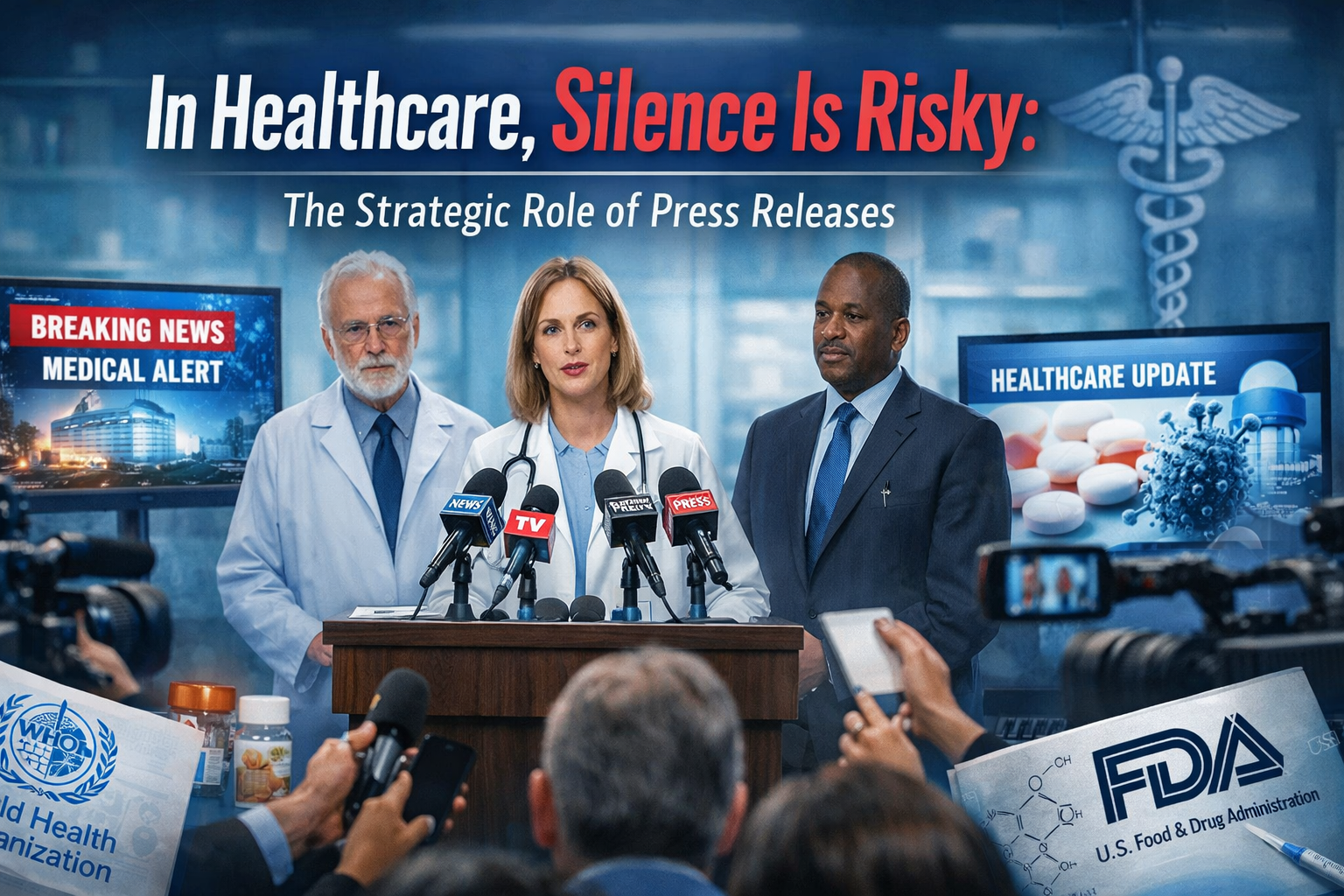
Regulatory oversight from authorities such as the World Health Organization and the U.S. Food and Drug Administration means that messaging must be precise, compliant, and defensible. Any ambiguity or delay in communication can lead to misinformation, reputational damage, or loss of public confidence.
Press releases allow healthcare organizations to proactively shape narratives, provide timely updates, and establish an official record of facts. In an industry where misinformation can spread rapidly and cause harm, structured media communication is not optional—it is essential.
Key Use Cases for Press Releases in the Healthcare Industry
Product and Service Launches
Whether introducing a new pharmaceutical drug, medical device, diagnostic tool, or digital health platform, healthcare launches require careful explanation. Press releases help contextualize innovation, clarify clinical relevance, and communicate regulatory status without overstating claims.
Corporate Announcements and Milestones
Mergers, acquisitions, facility expansions, funding rounds, and research partnerships are common in healthcare. Press releases ensure these developments are communicated consistently to investors, partners, regulators, and the public, reinforcing transparency and strategic intent.
Crisis Communication and Issue Management
Healthcare organizations face crises ranging from product recalls and data breaches to clinical trial setbacks. In such moments, timely and factual press releases help control speculation, demonstrate accountability, and provide stakeholders with verified information.
Thought Leadership and Authority Building
Healthcare leaders and researchers often shape policy and clinical practice. Press releases announcing studies, white papers, or expert commentary position organizations as credible voices within medical and scientific discourse.
Types of Press Releases Commonly Used in This Industry
Healthcare organizations rely on several press release formats, each serving distinct communication objectives.
Clinical trial announcements are used to disclose trial initiations, milestones, or results, often with strict compliance requirements. Regulatory approval releases communicate clearances or authorizations from health authorities and must avoid promotional language.
Corporate updates include leadership changes, governance disclosures, and financial results. Public health announcements are used by hospitals and institutions to share patient advisories, service changes, or community initiatives.
Across all formats, compliance with disclosure standards, patient privacy laws, and advertising regulations is critical. Healthcare press releases must balance accessibility with scientific accuracy.
Benefits of Press Releases for Healthcare Brands
Media Visibility and Credibility
Journalists covering healthcare, science, and policy rely on press releases as primary information sources. Well-crafted releases improve the likelihood of accurate coverage in respected media outlets, reinforcing organizational credibility.
SEO and Online Reputation
Press releases contribute to a healthcare organization’s digital footprint. When indexed by search engines and cited by media, they support long-term reputation management and visibility for topics related to patient care, innovation, and compliance.
Stakeholder Confidence
Patients, healthcare professionals, investors, and regulators all seek clarity and consistency. Regular, factual press releases demonstrate organizational stability and commitment to transparent communication, strengthening trust across stakeholder groups.
Industry-Specific Best Practices for Writing Press Releases
Tone and language in healthcare press releases should be measured, factual, and professional. Claims must be supported by data, peer-reviewed research, or regulatory validation. Sensationalism, exaggerated benefits, or speculative outcomes should be avoided.
Timing is equally important. Healthcare news should be released promptly, particularly when public safety or regulatory developments are involved. Delayed communication can create information vacuums filled by speculation.
Including expert quotes from clinicians, researchers, or compliance officers adds credibility. All data points should be verifiable, and sources should be clearly attributed to maintain journalistic trust.
Common Press Release Mistakes to Avoid in the Healthcare Sector
One of the most frequent errors is overly promotional language that resembles advertising rather than reporting. Such tone undermines credibility and may attract regulatory scrutiny.
Poor journalist targeting is another common issue. Healthcare press releases should be directed to reporters and outlets with expertise in medical, scientific, or health policy coverage.
Ignoring regulatory and ethical guidelines can have serious consequences. Omitting risk disclosures, overstating efficacy, or failing to address patient privacy can damage reputation and invite penalties.
Finally, many organizations neglect post-release engagement. Press releases should be supported by media availability, follow-up clarifications, and accessible spokespersons.
Real-World Example: Communicating Clinical Transparency
Consider a mid-sized pharmaceutical company conducting a Phase III clinical trial for a chronic disease treatment. Interim results showed mixed outcomes, with strong efficacy in one patient subgroup but limited impact in others.
Instead of delaying disclosure, the company issued a balanced press release outlining the results, methodology, and next steps. By clearly presenting both strengths and limitations, the organization earned balanced media coverage and reinforced its commitment to scientific integrity. The key learning was clear: transparency builds long-term credibility, even when news is nuanced.
How to Distribute Press Releases for Maximum Impact in Healthcare
Effective distribution combines reach with relevance. Healthcare organizations should prioritize industry publications, medical journals’ news sections, and business media that cover health policy and innovation.
Press release distribution platforms help ensure broad visibility, but owned channels also matter. Maintaining a well-organized newsroom with archived releases, media contacts, and background materials supports ongoing media relations.
Media kits containing leadership bios, regulatory information, and clinical focus areas further assist journalists in contextualizing healthcare stories accurately.
Conclusion: Strategic Role of Press Releases in the Healthcare Industry
In healthcare, communication is inseparable from responsibility. Press releases remain a strategic tool for managing information flow, building trust, and maintaining credibility in a highly regulated and emotionally sensitive sector.
A well-executed press release for healthcare industry organizations does more than announce news; it demonstrates accountability, supports informed decision-making, and reinforces public confidence. In a landscape where silence can be misinterpreted or dangerous, consistent and transparent press communication is not merely beneficial—it is essential for long-term reputation and trust.