



Introduction
For non-profit organizations, visibility alone is never enough. Awareness must translate into tangible outcomes—donations, volunteer engagement, policy influence, and measurable social change. In this journey from awareness to action, communication plays a decisive role. Public relations, particularly through structured media communication, helps non-profits bridge the gap between intention and impact.
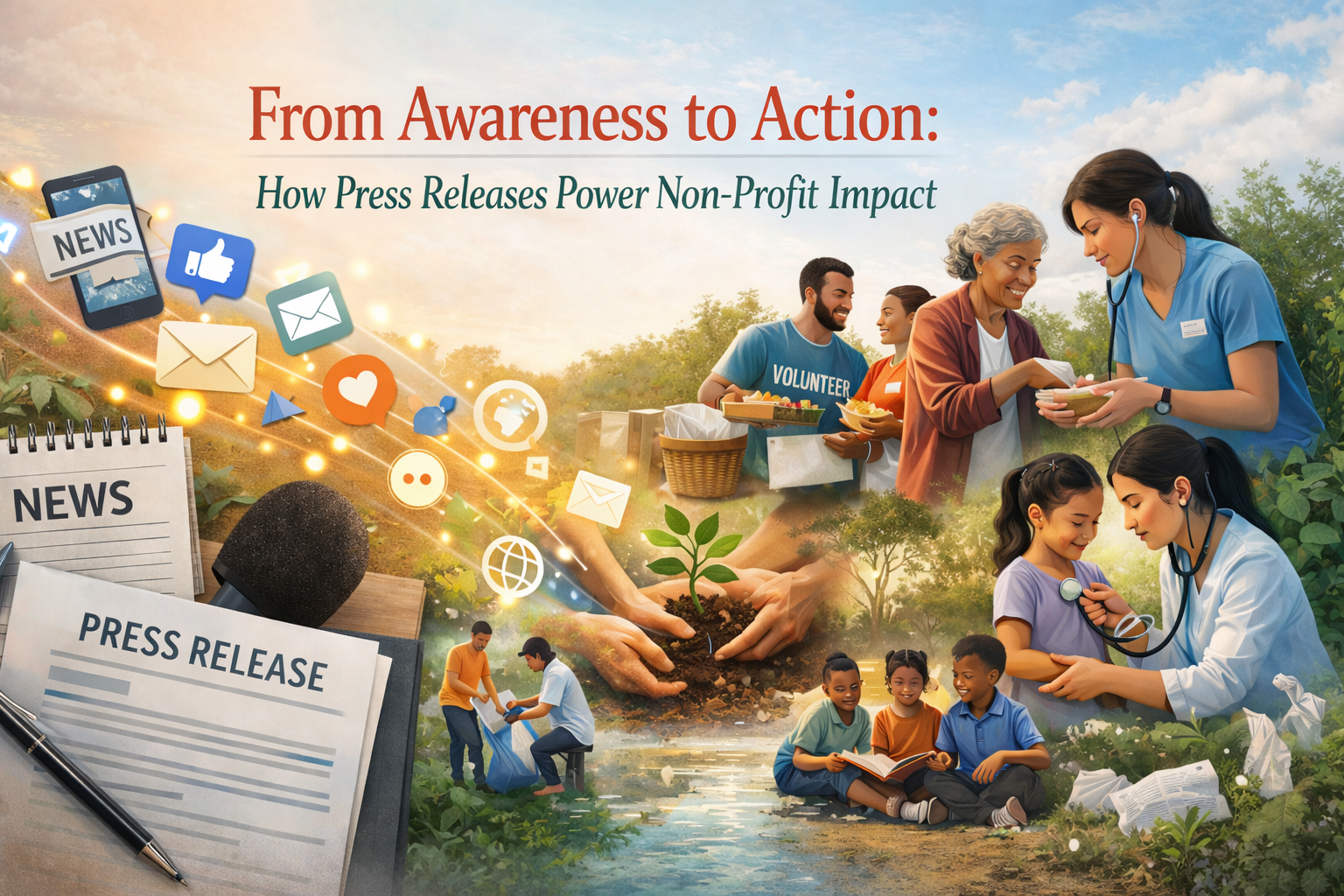
Even in 2026, when social media platforms, email campaigns, and digital storytelling tools dominate outreach strategies, press releases remain a vital communication instrument. Unlike informal channels, press releases provide credibility, permanence, and media legitimacy. For non-profits operating in trust-sensitive environments, a press release is not simply an announcement—it is a catalyst that converts public interest into meaningful participation.
Why the Non-Profit Industry Needs Press Releases
Non-profits operate under constant scrutiny from donors, regulators, beneficiaries, and the public. Their ability to attract funding, partnerships, and volunteers depends heavily on perceived transparency, governance, and impact.
Many non-profit organizations align their work with global frameworks shaped by institutions such as the United Nations, international development agencies, or national regulatory bodies. In such environments, communication must be accurate, consistent, and verifiable.
Press releases allow non-profits to establish an official narrative around their work. They help organizations proactively explain their mission, clarify the use of funds, respond to public questions, and demonstrate accountability. In the absence of formal communication, silence or fragmented messaging can quickly erode trust and weaken stakeholder confidence.
Why Press Releases Move Non-Profits From Awareness to Action
Unlike promotional content, press releases are designed to inform rather than persuade overtly. This distinction is especially important in the non-profit sector, where credibility matters more than marketing appeal.
Press releases provide context, facts, and outcomes, enabling journalists and stakeholders to understand why an issue matters and how the organization is addressing it. When a cause is communicated through trusted media channels, it gains legitimacy. That legitimacy often becomes the trigger for action—whether it is a donor deciding to contribute, a volunteer signing up, or a policymaker taking notice.
A well-structured press release for non-profit industry organizations creates momentum by aligning mission, message, and measurable outcomes.
Key Use Cases for Press Releases in the Non-Profit Sector
Campaign and Program Launches
When non-profits launch new programs, advocacy campaigns, or community initiatives, press releases help explain objectives, target beneficiaries, and expected impact. This clarity ensures that media coverage accurately reflects the organization’s intent and encourages informed public engagement.
Funding and Grant Announcements
Transparency around funding is essential for non-profits. Press releases announcing grants, institutional funding, or major donations reassure stakeholders that resources are being mobilized responsibly and aligned with mission priorities.
Impact Milestones and Results
Non-profits are evaluated by outcomes rather than profits. Press releases highlighting milestones, annual impact reports, or program results help translate data into accessible narratives that reinforce effectiveness and accountability.
Crisis Communication and Public Accountability
Operational challenges, funding controversies, or external criticism can threaten credibility. Press releases provide a structured way to address concerns, correct misinformation, and reaffirm ethical commitments during sensitive situations.
Types of Press Releases Commonly Used by Non-Profits
Non-profit organizations rely on several press release formats to support their communication goals.
Program announcement releases introduce new initiatives or expansions. Impact and results releases share measurable outcomes, beneficiary reach, or long-term progress. Partnership releases announce collaborations with governments, foundations, or other non-profits, strengthening collective credibility.
Advocacy and policy releases articulate positions on social, environmental, or humanitarian issues, often aligned with awareness days or legislative developments. Governance and leadership releases disclose board appointments, executive changes, or organizational restructuring, reinforcing transparency.
Across all formats, non-profits must clearly distinguish between goals and achieved results, avoiding exaggerated claims or ambiguous language.
Benefits of Press Releases for Non-Profit Organizations
Credible Media Visibility
Journalists covering social impact, development, and public policy rely on press releases as primary sources. Well-crafted releases increase the likelihood of earned media coverage, extending reach without advertising expenditure.
Turning Awareness Into Action
Press releases do more than inform. By outlining needs, outcomes, and progress, they encourage donors, volunteers, and partners to take concrete steps in support of the mission.
SEO and Long-Term Reputation Management
Press releases contribute to a non-profit’s digital footprint. When indexed by search engines and cited by credible media, they support long-term online reputation and ensure accurate information is discoverable.
Strengthening Stakeholder Confidence
Donors, grant-makers, regulators, and beneficiaries expect clarity and consistency. Regular press communication signals professionalism, governance strength, and commitment to transparency.
Industry-Specific Best Practices for Writing Non-Profit Press Releases
Tone is critical in non-profit communication. Press releases should be mission-driven, factual, and measured, avoiding emotional exaggeration or promotional language.
Impact claims should be supported by verifiable data, independent evaluations, or third-party validation wherever possible. Transparency around funding sources, partnerships, and timelines enhances credibility.
Timing also matters. Press releases should align with meaningful milestones, funding cycles, or policy moments rather than being issued reactively or excessively.
Including quotes from organizational leaders, program managers, beneficiaries, or subject-matter experts adds authenticity while maintaining journalistic value.
Common Press Release Mistakes to Avoid in the Non-Profit Sector
One of the most common mistakes is prioritizing emotion over evidence. While storytelling is important, press releases must foreground facts, outcomes, and accountability.
Poor media targeting is another issue. Non-profit press releases should be sent to journalists and outlets that cover social impact, development, public policy, or community affairs.
Lack of financial or governance transparency can raise red flags. Omitting funding context or oversight structures undermines trust.
Finally, many non-profits fail to follow up. Press releases should be supported by responsive media contacts and accessible background information.
Real-World Example: Converting Visibility Into Participation
A regional education-focused non-profit launched a literacy initiative targeting underserved communities. Alongside grassroots outreach, the organization issued a press release detailing program goals, funding partners, and expected outcomes.
The release was covered by education and regional media outlets, resulting in increased volunteer registrations and new donor inquiries. The key takeaway was that structured media communication can transform awareness into measurable engagement.
How to Distribute Press Releases for Maximum Impact in the Non-Profit Sector
Effective distribution balances reach with relevance. Non-profits should prioritize media outlets that focus on social impact, development, education, healthcare, or environmental issues.
Press release distribution platforms help extend visibility, but owned channels are equally important. A transparent newsroom featuring archived releases, annual reports, governance documents, and impact data supports media trust.
Comprehensive media kits—including mission statements, leadership bios, financial summaries, and program overviews—enable journalists to cover stories accurately and in depth.
Conclusion: Press Releases as Catalysts for Non-Profit Impact
For non-profits, communication is inseparable from impact. Press releases remain a strategic tool for converting awareness into action by providing credibility, clarity, and reach in a crowded information landscape.
A well-executed press release for non-profit industry organizations does more than share news. It reinforces accountability, mobilizes stakeholders, and supports long-term mission sustainability. In a sector driven by trust and purpose, press releases are not optional—they are catalysts for meaningful and measurable change.