Introduction
The hospitality industry is built on experience, perception, and trust. Hotels, resorts, restaurants, travel operators, and destination brands succeed not only by delivering quality service, but by shaping how their experiences are perceived before a guest ever arrives. Public relations plays a central role in this process, translating operational excellence into public credibility.
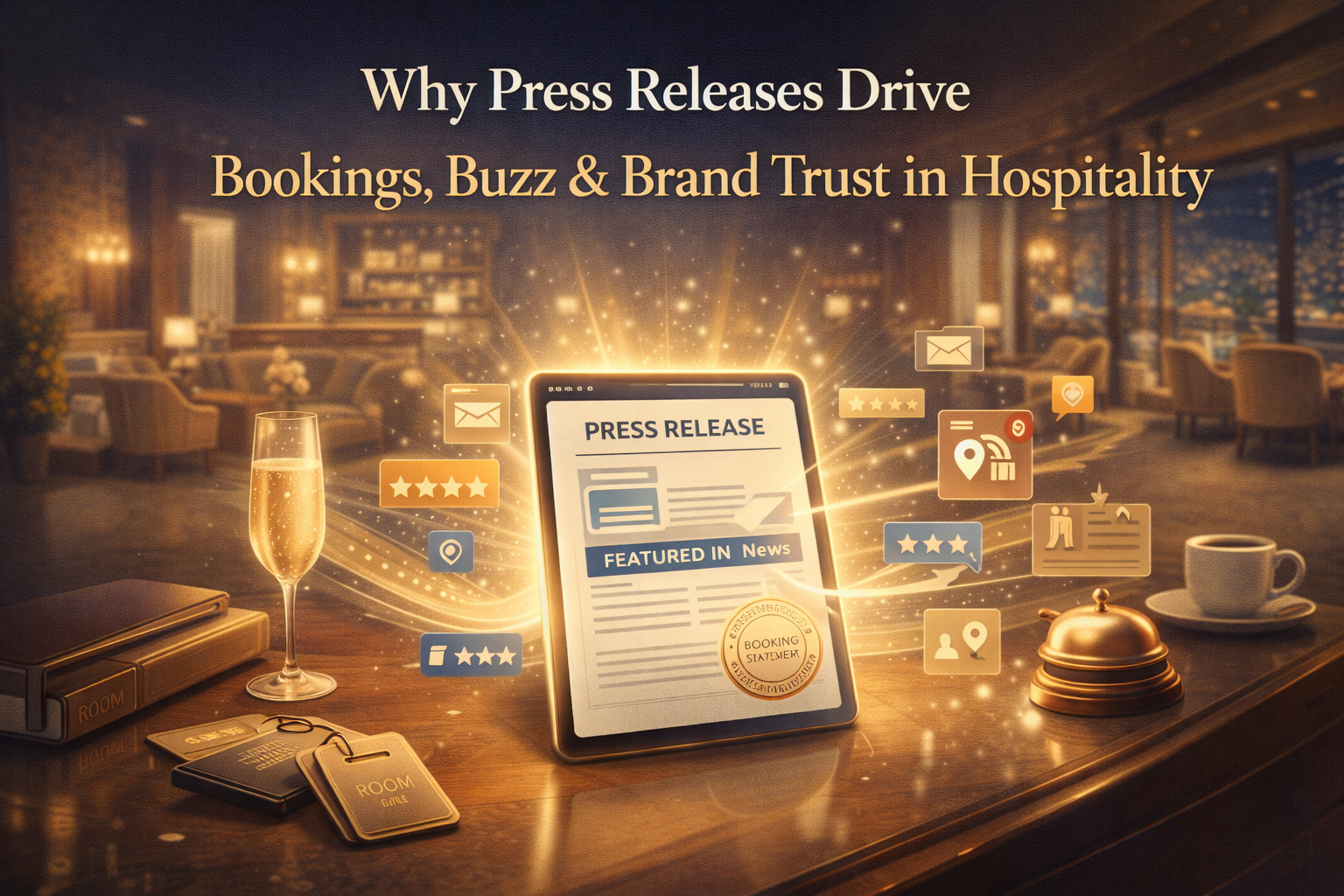
Despite the dominance of social media, influencer marketing, and online travel platforms, press releases remain a powerful and relevant communication tool in 2026. In hospitality, where reputation directly influences bookings and pricing power, press releases offer structured, credible, and media-ready communication. A well-executed press release for hospitality industry audiences does more than generate awareness—it builds trust, creates buzz, and supports sustained demand.
Why the Hospitality Industry Needs Press Releases
Hospitality brands operate in a highly competitive and review-driven environment. Guests make decisions based on trust signals such as media coverage, awards, third-party validation, and brand consistency. Unlike many industries, hospitality products are experiential and intangible until consumed, making credibility essential.
Press releases help hospitality brands communicate key developments with authority and clarity. Whether announcing a new property, seasonal offering, leadership appointment, or sustainability initiative, press releases provide a formal narrative that journalists, travel writers, and industry analysts recognize as reliable.
The industry is also sensitive to external factors such as safety concerns, economic shifts, travel regulations, and public health developments. In such contexts, structured media communication becomes critical. Press releases allow hospitality organizations to address uncertainty, provide accurate information, and reinforce professionalism during both growth and disruption.
Key Use Cases for Press Releases in the Hospitality Industry
Property Openings and Relaunches
New hotel openings, restaurant launches, and renovated properties are among the most common hospitality press releases. These announcements help introduce the concept, location, and guest experience to media and travel planners in a consistent and compelling format.
Seasonal Campaigns and Experience Launches
Hospitality is inherently seasonal. Press releases are used to announce new menus, curated experiences, festivals, wellness programs, or holiday packages, helping generate timely coverage and consumer interest.
Awards, Rankings, and Accreditations
Industry awards, sustainability certifications, and service recognitions serve as strong trust signals. Press releases help contextualize these achievements and ensure accurate representation in the media.
Leadership and Brand Announcements
Executive appointments, chef introductions, or brand repositioning initiatives often signal strategic direction. Press releases provide clarity and reassurance to stakeholders, including investors, partners, and loyal guests.
Crisis Communication and Reputation Management
Operational incidents, safety concerns, service disruptions, or public criticism can quickly impact bookings. Press releases enable hospitality brands to communicate transparently, correct misinformation, and demonstrate accountability.
Types of Press Releases Commonly Used in Hospitality
Hospitality organizations rely on several press release formats, each aligned with guest perception and media interest.
Opening and launch press releases introduce properties, concepts, or destinations, focusing on experience, design, and differentiation rather than promotion.
Experience and lifestyle releases highlight dining concepts, wellness offerings, cultural programs, or partnerships that enhance guest appeal.
Award and recognition releases communicate third-party validation, reinforcing quality and credibility.
Corporate and leadership releases address ownership changes, executive appointments, or brand expansions, supporting long-term trust.
Crisis or clarification statements are used to address sensitive issues with transparency and responsibility.
Benefits of Press Releases for Hospitality Brands
Driving Bookings Through Credibility
Travel decisions are heavily influenced by trusted sources. Media coverage generated through press releases adds third-party validation that supports booking confidence, particularly for premium and experiential offerings.
Creating Buzz Beyond Owned Channels
Press releases help hospitality brands reach audiences beyond social media followers and email lists. Coverage in travel publications, business media, and destination features extends visibility and prestige.
Strengthening Brand Trust and Reputation
Consistent, professional communication signals reliability and operational maturity. Press releases reinforce brand values, service standards, and commitment to guest experience.
Supporting SEO and Online Discovery
A well-optimized press release for hospitality industry visibility contributes to search presence. Press releases published on authoritative platforms often rank well, shaping brand perception during trip planning and research.
Aligning Stakeholders and Partners
Hospitality brands work with investors, travel agents, tourism boards, and corporate clients. Press releases ensure consistent messaging across all stakeholders, reducing ambiguity and reinforcing confidence.
Industry-Specific Best Practices for Writing Hospitality Press Releases
Tone should be aspirational yet factual. Hospitality press releases must evoke experience without exaggeration. Overly promotional language can undermine credibility with journalists and discerning travelers.
Storytelling should be grounded in authenticity. Details such as location context, design philosophy, culinary approach, or sustainability practices add substance and relevance.
Timing is critical. Press releases should align with booking cycles, travel seasons, and editorial calendars to maximize impact.
Accuracy matters. Claims about amenities, services, or certifications must be verifiable. Misrepresentation can quickly lead to negative reviews and reputational damage.
Including expert quotes, such as from general managers, chefs, or designers, adds human perspective while maintaining professionalism.
Common Press Release Mistakes to Avoid in Hospitality
One common mistake is treating press releases as advertisements. Journalists and travel editors prioritize information, not sales language.
Another issue is lack of differentiation. Generic descriptions fail to capture what makes a property or experience unique, reducing media interest.
Poor targeting also limits impact. Sending luxury resort announcements to unrelated media outlets weakens coverage potential.
Ignoring crisis preparedness is a serious risk. Hospitality brands should have protocols for issuing timely and factual press releases during incidents.
Finally, many brands overlook follow-up. Media engagement and responsiveness are essential to convert announcements into meaningful coverage.
Real-World Example: Turning Media Coverage Into Measurable Demand
A boutique hotel group launching a new coastal property issued a press release highlighting its design inspiration, sustainability credentials, and local partnerships. Rather than focusing on pricing or promotions, the release emphasized experience and destination relevance.
The announcement was featured in travel and lifestyle publications, driving early interest and group inquiries ahead of peak season. The key learning was that credibility-led storytelling through a press release can translate directly into bookings without overt selling.
How to Distribute Press Releases for Maximum Hospitality Impact
Effective distribution prioritizes relevance and authority. Hospitality press releases should target travel journalists, lifestyle editors, business publications, and destination-focused media.
Press release distribution platforms can extend reach, especially for new or independent brands. However, direct outreach to travel writers and editors often yields deeper coverage.
Maintaining an up-to-date newsroom with high-quality visuals, fact sheets, and background information is essential. Media professionals rely on official sources for verification and assets.
Collaboration with tourism boards and destination partners can further amplify reach and credibility.
Conclusion: Press Releases as Trust Builders in Hospitality
In hospitality, perception shapes demand, and trust drives loyalty. Press releases remain one of the most effective tools for building both. They provide structure, authority, and third-party validation in an industry where experience must be trusted before it is lived.
As digital channels multiply and competition intensifies, the value of disciplined, credible communication only increases. A thoughtful press release for hospitality industry audiences does more than create buzz—it supports bookings, strengthens brand trust, and reinforces long-term reputation.
Ultimately, press releases are not a legacy tactic in hospitality. They are a strategic asset, helping brands communicate with clarity, confidence, and credibility in a marketplace defined by choice and expectation.