Introduction
Education has always relied on trust, credibility, and public confidence. Whether it is a school shaping young learners, a university attracting global students, or an EdTech company redefining digital learning, communication plays a central role in institutional reputation. Public relations, therefore, is not peripheral to education it is foundational.
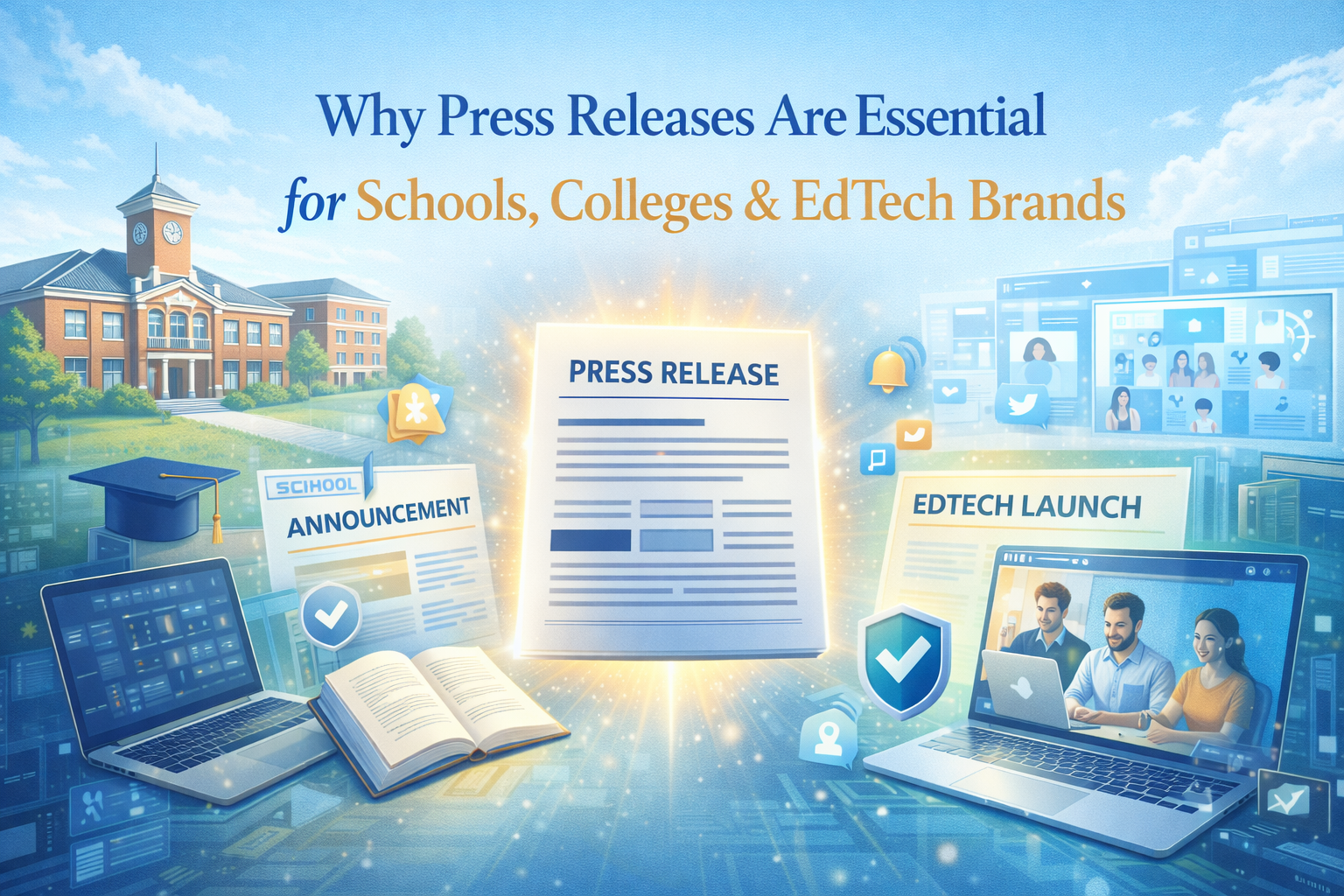
In 2026, educational institutions and EdTech brands operate in a crowded, highly scrutinized environment shaped by policy changes, parental expectations, technology disruption, and global competition. While social media and performance marketing are widely used, they often lack the authority required for serious institutional communication. This is where press releases continue to matter. A well-structured press release for education industry communication remains one of the most credible ways to share verified information with media, stakeholders, and the public.
Why the Education Industry Needs Press Releases
The education sector faces unique challenges that demand disciplined and transparent communication. Schools and colleges must address concerns around academic quality, safety, compliance, and outcomes. EdTech companies, meanwhile, are expected to demonstrate credibility, data protection, and measurable impact in an increasingly regulated digital space.
Press releases help institutions communicate in a factual, standardized format that journalists, policymakers, and parents recognize as reliable. Unlike promotional posts or advertisements, press releases are designed to inform, not persuade. This distinction is especially important in education, where exaggerated claims can quickly erode trust.
Another key factor is accountability. Educational institutions are often accountable to multiple stakeholders including students, parents, governing bodies, investors, and regulators. Press releases create an official record of announcements, decisions, and milestones, reinforcing transparency and institutional integrity.
Key Use Cases for Press Releases in the Education Industry
Academic and Program Launches
New academic programs, curriculum updates, certification courses, or learning platforms require clear and accurate communication. Press releases ensure that details such as accreditation, eligibility, learning outcomes, and timelines are communicated responsibly.
Institutional Announcements and Milestones
Schools and colleges frequently announce campus expansions, new facilities, rankings, partnerships, or leadership appointments. Press releases provide context and legitimacy to these updates, making them relevant to education and business media.
Admissions and Enrollment Updates
While admissions marketing is often promotional, press releases play a complementary role by communicating policy changes, application milestones, scholarships, or international collaborations in a neutral and informative manner.
Crisis Communication and Policy Updates
Education institutions must occasionally address sensitive issues such as regulatory changes, safety incidents, examination policies, or operational disruptions. In such situations, press releases help manage information flow, reduce speculation, and demonstrate responsible governance.
Thought Leadership and Research Communication
Universities and EdTech firms are significant contributors to research and innovation. Press releases allow them to share study findings, pedagogical insights, and data-backed perspectives, positioning institutions as knowledge leaders rather than advertisers.
Types of Press Releases Commonly Used in This Industry
Educational organizations use several press release formats tailored to their operational needs:
- Academic Program Announcements detailing course structure, accreditation, and outcomes
- Institutional Milestone Releases covering rankings, anniversaries, or infrastructure developments
- Leadership and Faculty Appointments highlighting governance and academic strength
- Research and Innovation Releases focused on studies, patents, or learning methodologies
- Policy and Compliance Updates related to education boards, ministries, or digital learning regulations
For EdTech brands, additional attention must be paid to data privacy, learner outcomes, and regulatory alignment. Any claims related to performance or impact must be evidence-based and clearly contextualized.
Benefits of Press Releases for Schools, Colleges & EdTech Brands
Enhanced Media Credibility
Education journalists and editors rely on press releases as primary sources of verified information. Coverage earned through credible media outlets carries significantly more trust than self-published content, particularly among parents and institutional decision-makers.
Stronger Online Reputation and SEO
Press releases contribute to long-term digital presence. When published on authoritative platforms and referenced by news websites, they strengthen search visibility and brand reputation. Over time, this supports institutional credibility far beyond short-term campaigns.
Stakeholder Trust and Confidence
Parents, students, investors, and regulators expect transparency from education providers. Regular, well-documented press releases signal professionalism, stability, and accountability, reinforcing confidence across stakeholder groups.
Industry-Specific Best Practices for Writing Press Releases
Use Clear, Responsible Language
Education press releases should prioritize clarity over creativity. Avoid superlatives and unverifiable claims, especially when discussing outcomes, rankings, or student success. Accuracy is essential to maintain institutional trust.
Prioritize Verification and Compliance
All facts, affiliations, accreditations, and statistics must be verified before release. In education, even minor inaccuracies can lead to reputational or regulatory challenges.
Choose Timing Carefully
Announcements should align with academic calendars, policy decisions, or enrollment cycles. Poor timing can reduce relevance or create confusion among stakeholders.
Include Contextual Expertise
Quotes from academic leaders, researchers, or product heads add value when they explain significance rather than promote offerings. Expert context increases the likelihood of meaningful media coverage.
Common Press Release Mistakes to Avoid in the Education Sector
One frequent mistake is adopting a marketing-heavy tone. Journalists are unlikely to engage with content that resembles advertising rather than news.
Another issue is generic distribution. Sending the same press release to unrelated reporters reduces credibility. Education communication requires targeting education, policy, technology, and regional media selectively.
Ignoring ethical and regulatory considerations is particularly risky. Claims about rankings, placement outcomes, or learning effectiveness must be carefully worded and substantiated.
Finally, many institutions neglect follow-up. Press releases should initiate dialogue with media, not conclude it. Availability for clarification and interviews significantly improves impact.
Real-World Example or Mini Case Study
An EdTech company launching a digital learning platform for rural schools chose to frame its press release around access, teacher enablement, and policy alignment rather than commercial growth. The release highlighted pilot results, partnerships with local education bodies, and data on student engagement.
Education and policy publications covered the announcement, focusing on its potential social impact. While the release did not promote pricing or sales, it strengthened the company’s credibility among educators and institutional partners. The key takeaway was that relevance, evidence, and restraint drove meaningful attention.
How to Distribute Press Releases for Maximum Impact in This Industry
Effective distribution requires alignment with the education ecosystem. Priority channels include:
- Education and academic publications
- Policy and governance-focused media
- Regional and community news outlets
- Technology and innovation journals for EdTech brands
Press release distribution platforms help extend reach, but owned assets are equally important. A well-maintained newsroom page with past releases, leadership profiles, and institutional data supports journalist access and consistency.
Sustained, thoughtful distribution builds long-term media relationships rather than one-time visibility.
Conclusion: Strategic Role of Press Releases in the Education Industry
For schools, colleges, and EdTech brands, communication is inseparable from credibility. In an environment shaped by trust, regulation, and long-term impact, press releases remain one of the most effective tools for responsible public communication.
A disciplined press release for education industry strategy supports transparency, reinforces reputation, and ensures that institutions are understood accurately by the public and the media. In an era of rapid digital change, press releases continue to serve as a stable, authoritative foundation for educational public relations.